
Clean, clear glass can transform the appearance of a home, office, shop, or commercial building. Sparkling windows allow natural light to enter, spotless mirrors improve the look of interiors, and clean glass doors create a welcoming impression. However, achieving a professional finish requires more than simply spraying a cleaning product and wiping it away. The right cleaning solution, equipment, technique, and drying method all play important roles.
So, what do professional cleaners use on glass? Professional cleaners commonly use professional glass-cleaning solutions, microfiber cloths, squeegees, scrubbers, and purified water systems. The exact combination depends on the type of glass, the amount of dirt, the location, and whether the surface has a protective coating.
Some cleaners use ready-to-use commercial products for mirrors and interior windows, while others use a diluted cleaning solution and a professional squeegee for larger glass surfaces. For exterior windows, purified water and water-fed poles can help remove dirt without leaving mineral deposits behind.
In this guide, you will discover the products and tools professionals use, how their methods work, which cleaning solutions are suitable for different surfaces, and how to achieve clear glass without unnecessary streaks.
What Do Professional Cleaners Use on Glass?
Professional cleaners generally select their equipment according to the cleaning task rather than relying on one product for every surface.
Their most common tools and products include:
- Professional glass-cleaning solutions for fingerprints, grease, and everyday dirt.
- Microfiber cloths for removing dust, wiping edges, and polishing glass.
- Squeegees for removing cleaning solution and water from large glass surfaces.
- Window scrubbers for loosening dirt before squeegeeing.
- Purified or demineralized water for exterior glass cleaning.
- Extension poles for reaching high windows safely from appropriate positions.
- Mild detergent solutions for certain heavily soiled surfaces.
The most effective approach is to match the cleaning method to the glass. Ordinary windows may tolerate a standard glass cleaner, whereas tinted glass, coated windows, specialty mirrors, and electronic screens may require specific products.
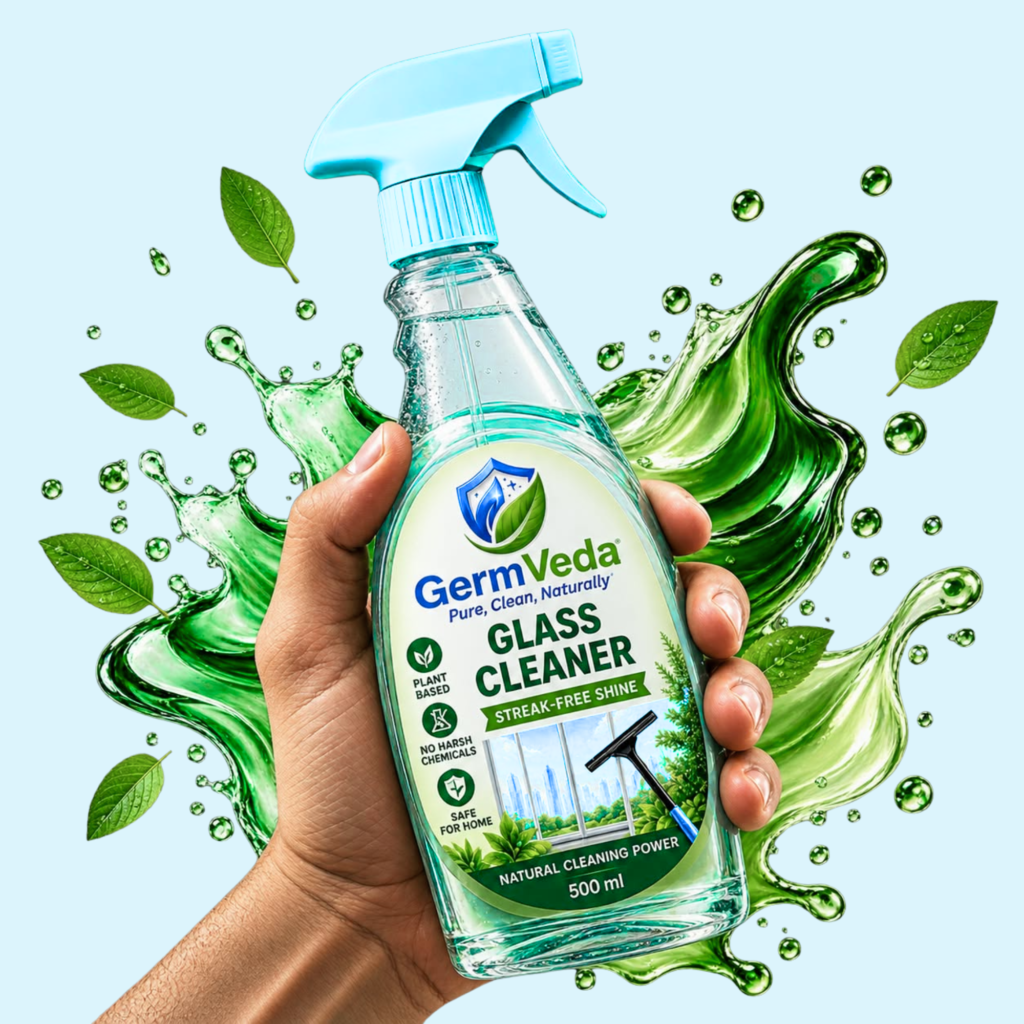
1. Professional Glass-Cleaning Solutions
Professional glass cleaners are formulated to remove common marks while making it easier to achieve a clear finish. Depending on the product, they may contain water, solvents, surfactants, and other ingredients that help loosen dirt and manage drying.
Professional cleaners choose products based on their performance, surface compatibility, drying characteristics, and the manufacturer’s instructions.
Ready-to-Use Glass Cleaners
Ready-to-use cleaners are convenient for mirrors, interior windows, glass partitions, and other suitable surfaces. They eliminate the need to measure or dilute a concentrate.
A professional may apply a small amount to a microfiber cloth or spray a light mist onto the glass, depending on the surface and product directions.
These products are especially convenient for fingerprints, light grease, and everyday smudges. However, not every ready-to-use formula is suitable for tinted windows, coated glass, or electronic screens.
Concentrated Glass-Cleaning Solutions
Some professional products are supplied as concentrates that must be diluted before use. These can be economical for cleaning large areas, provided the correct dilution is followed.
Using too much concentrate may leave residue, increase cleaning costs, or create unnecessary exposure to chemicals. Using too little may reduce cleaning performance.
Professional cleaners follow the manufacturer’s recommended dilution rather than assuming that a stronger mixture will produce better results.
Ammonia-Free Glass Cleaners
Ammonia-free cleaners are commonly available for household and commercial glass. Some are selected because they are appropriate for particular surfaces or because the user prefers to avoid ammonia-based formulas.
However, ammonia-free does not automatically mean suitable for every material. Always check the label, especially for tinted glass, protective films, painted frames, and delicate finishes.
Alcohol-Based Glass Cleaners
Some glass-cleaning products contain alcohol or other volatile solvents that help dissolve certain greasy marks and evaporate quickly.
These formulas can be useful for suitable glass surfaces, but alcohol may damage some coatings, plastics, painted finishes, and other sensitive materials. Alcohol-containing products are also flammable when applicable, so keep them away from ignition sources and follow the product’s safety instructions.
2. Professional Squeegees
A squeegee is one of the most recognizable tools used in professional window cleaning. It consists of a handle, a channel, and a flexible rubber blade that removes liquid from the glass.
When used correctly, a squeegee can clean large windows efficiently while reducing streaks and drying marks.
Why Professionals Use Squeegees
Squeegees remove the cleaning solution and loosened dirt instead of relying entirely on cloths to absorb the moisture. This is particularly helpful when cleaning large windows, glass doors, and commercial storefronts.
A properly maintained blade helps create a smooth, even finish.
How Professionals Use a Squeegee
The general process involves loosening the dirt with a scrubber, positioning the squeegee against the glass, and moving the blade across the surface with controlled pressure.
Professionals may use straight pulls or a continuous overlapping technique, depending on the window size and their experience.
After each pass, they wipe the blade clean as necessary. They also use a detailing cloth around the edges to remove remaining droplets.
Choosing the Right Squeegee
Squeegee size depends on the window dimensions and the available working space. Smaller tools are useful for narrow panes, while wider blades can speed up cleaning on large windows.
The rubber blade must be clean and free of nicks. A damaged blade may leave lines even when the cleaning solution is suitable.
3. Microfiber Cloths for Glass Cleaning
Microfiber cloths are essential tools for many professional cleaning tasks. Their fine fibers help collect dust, absorb moisture, and remove fingerprints without leaving as much lint as some ordinary fabrics.
Professionals often use multiple cloths during one cleaning job to prevent dirt from being transferred between surfaces.
Where Microfiber Works Best
Microfiber cloths are particularly useful for:
- Mirrors and interior glass.
- Glass tabletops and cabinet doors.
- Removing fingerprints and light smudges.
- Wiping window edges and frames.
- Polishing glass after the main cleaning process.
A cloth may also be used to apply a cleaning solution, depending on the product instructions.
How to Maintain Microfiber Cloths
Dirty cloths can leave streaks, so professional cleaners wash and replace them regularly.
Wash microfiber separately from heavily lint-producing fabrics when possible. Avoid fabric softener, which can leave a coating on the fibers and reduce absorbency.
Allow the cloths to dry fully before storage. Keep glass-cleaning cloths separate from those used for greasy kitchen surfaces or other dirty jobs.
4. Window Scrubbers and Applicators
Before using a squeegee, professional cleaners often use a window scrubber or applicator to loosen dirt.
A scrubber typically consists of a handle and a washable fabric sleeve that holds cleaning solution against the glass.
How a Scrubber Helps
Dust, pollen, fingerprints, and accumulated outdoor dirt can cling to glass. A scrubber distributes the cleaning solution and helps loosen these particles before they are removed.
This reduces the amount of scrubbing required and helps prepare the surface for the squeegee.
Using a Scrubber Correctly
The cleaner wets the applicator with the appropriate solution and works across the glass without applying unnecessary pressure.
For heavily soiled exterior windows, loose debris may need to be removed first. This helps prevent abrasive particles from being rubbed across the surface.
The applicator should be rinsed or cleaned when it becomes dirty. A contaminated scrubber can spread dirt instead of removing it.
5. Purified Water Systems for Exterior Glass
For many exterior window-cleaning jobs, professional cleaners use purified or demineralized water. These systems remove many dissolved minerals that would otherwise remain on the glass after ordinary water evaporates.
The exact equipment varies, but some systems use filtration or deionization to produce water with a low mineral content.
Why Purified Water Matters
Tap water contains varying levels of dissolved minerals. When droplets dry on glass, these minerals can remain behind and create spots.
Purified water reduces this problem when used correctly. It is particularly useful for exterior windows exposed to dust, rain residue, and environmental pollution.
Water-Fed Poles
A water-fed pole delivers purified water to a brush at the end of an extendable pole. The cleaner brushes the glass to loosen dirt and then rinses it with purified water.
When the system is suitable for the building and the surface, this method allows cleaners to reach many elevated windows while remaining on the ground.
However, not every building or window is appropriate for every pole system. The operator must consider the building’s design, nearby electrical hazards, access restrictions, and manufacturer guidance.
Is Purified Water Enough?
Purified water can clean many exterior windows effectively, especially when used with an appropriate brush and proper rinsing technique.
Heavily soiled glass may still require a suitable cleaning agent or a preliminary cleaning step. Purified water is not a universal solution for grease, paint, adhesive, or every type of stubborn deposit.
6. Mild Detergent Solutions
Some professional cleaners use a mild detergent solution to loosen dirt before removing it with a squeegee or cloth.
The formulation and dilution depend on the cleaning product and the job. More detergent is not necessarily better: excessive product can leave residue and make it harder to achieve a streak-free finish.
When Detergent Is Useful
A suitable mild detergent can help remove ordinary dirt and some greasy residue from compatible glass surfaces.
It may be particularly useful when the glass is visibly dirty and a small amount of cleaning solution helps the scrubber move smoothly across the surface.
Why Proper Dilution Matters
Too much detergent can produce excessive foam and leave a film after drying. Too little may not provide the cleaning performance needed for the job.
Professionals follow the product label and use the minimum effective concentration.
After cleaning, the solution must be removed thoroughly. A squeegee or clean-water rinse can help, depending on the method and product.
7. How Professionals Clean Different Glass Surfaces
Although professional tools are useful, the best cleaning method depends on the specific surface.
Windows
For ordinary windows, professionals may use a scrubber, suitable cleaning solution, and squeegee. They first remove loose debris, wet the glass, remove the solution, and detail the edges.
Exterior windows may need additional attention because of pollen, road dust, bird droppings, and mineral deposits.
Cleaning should be scheduled for suitable weather conditions. Hot glass and direct sunlight can cause the solution to dry too quickly, leaving streaks.
Mirrors
Mirrors often require less liquid than large windows. Professionals typically use a clean microfiber cloth and a suitable mirror or glass cleaner.
They avoid saturating the edges because moisture can enter behind the reflective backing and contribute to deterioration.
A separate dry cloth can be used to remove remaining marks without applying unnecessary pressure.
Glass Doors and Partitions
Interior glass doors and partitions collect fingerprints from frequent contact. A suitable glass cleaner and microfiber cloth are often sufficient.
For larger partitions, professionals may use a scrubber and squeegee. They also pay attention to handles, edges, and surrounding frames, using separate methods where the materials require them.
Shower Doors
Shower glass can accumulate soap residue and mineral deposits. The cleaner must be appropriate for the glass treatment and surrounding surfaces.
A squeegee used after showering can reduce water spots. For established deposits, a product designed for the particular buildup may be required.
Vinegar or other acidic products should only be used when permitted by the glass and hardware manufacturers. Acidic cleaners can damage natural stone, certain metal finishes, and some protective coatings.
Glass Tabletops
Glass tabletops frequently develop fingerprints, dust, and food residue. A microfiber cloth and suitable cleaner are often effective.
If greasy marks remain, an approved mild cleaning solution may help. Avoid allowing liquid to collect around decorative edges, wooden supports, or metal fittings.
Tinted and Coated Glass
Tinted windows and glass with special protective coatings require extra care. Some products that work on ordinary glass can damage films or finishes.
Professional cleaners check the manufacturer’s recommendations before selecting a product. They may use a mild, approved cleaner and a soft cloth instead of a standard window-cleaning chemical.
Electronic Screens
Television, laptop, tablet, and monitor screens should not be treated as ordinary window glass. Many have delicate coatings that can be damaged by alcohol, ammonia, or other conventional cleaning products.
Professionals follow the equipment manufacturer’s cleaning instructions, use a soft microfiber cloth, and avoid spraying liquid directly onto the screen.
8. Step-by-Step Professional Glass-Cleaning Method
A consistent method helps achieve reliable results and reduces the need to repeat the same work.
Step 1: Inspect the glass. Identify the type of surface and look for scratches, damaged coatings, paint, adhesive, or stubborn deposits.
Step 2: Remove loose dirt. Use an appropriate soft brush or dry microfiber cloth to remove dust and loose particles before wet cleaning.
Step 3: Select the right solution. Choose a cleaner approved for the surface and follow its instructions for use and dilution.
Step 4: Apply the solution. Use a scrubber or microfiber cloth to distribute the cleaner evenly. Avoid excessive liquid and protect surrounding materials.
Step 5: Loosen the dirt. Work across the surface with controlled strokes. Do not use abrasive materials unless the glass manufacturer specifically approves the method.
Step 6: Remove the solution. Use a clean squeegee, microfiber cloth, or approved rinsing method to remove loosened dirt and moisture.
Step 7: Detail the edges. Wipe the corners, edges, and surrounding areas with a clean cloth. This prevents droplets from running back onto the glass.
Step 8: Inspect the finish. Check the surface under good lighting. If marks remain, identify their cause before applying more product.
This process can be adapted for different windows and glass surfaces. The important point is to use compatible products and clean tools throughout the job.
9. Common Mistakes That Cause Streaky Glass
Even professional-quality products can leave poor results when used incorrectly.
Using Too Much Cleaning Solution
Excess liquid may drip, collect around edges, or leave residue. Apply enough solution to loosen the dirt without soaking the surface unnecessarily.
Using Dirty Cloths or Squeegees
A dirty cloth transfers grease and particles onto clean glass. A damaged squeegee blade can leave lines. Wash cloths regularly and inspect the blade before use.
Cleaning in Direct Sunlight
Hot glass can cause the solution to evaporate before it is removed. Whenever possible, clean in shaded conditions or when the glass is cooler.
Ignoring Hard-Water Deposits
Mineral deposits may not respond to ordinary glass cleaner. Repeated wiping may not solve the problem, particularly when deposits have accumulated over a long period.
Use a product specifically suitable for the glass and deposit type. Avoid scraping or using strong chemicals without checking surface compatibility.
Using the Wrong Product
A product designed for ordinary windows may not be suitable for coated glass, screens, or specialty mirrors. Always check the label and manufacturer instructions.
Skipping the Final Inspection
Small droplets, edge marks, and streaks can remain unnoticed until the light changes. Inspecting the glass from different angles helps identify areas that need additional attention.
10. Professional Glass Cleaners vs. Homemade Solutions
Both professional products and homemade solutions can have a place in household cleaning, but they are not interchangeable in every situation.
| Feature | Professional glass cleaner | Homemade solution |
|---|---|---|
| Convenience | Often ready to use | Usually requires preparation |
| Formulation | Designed for stated uses | Depends on selected ingredients |
| Consistency | Manufactured to a defined formula | Can vary with measuring and water quality |
| Large jobs | Some products are available as concentrates | May be less convenient for large-scale work |
| Specialized surfaces | Some products target particular applications | Compatibility must be assessed carefully |
| Cost | Varies by brand and concentration | May be economical for simple tasks |
A homemade mixture of white vinegar and water can be useful for certain types of residue on compatible glass. However, vinegar is acidic and is not appropriate for all coatings, frames, or surrounding materials.
Commercial products may be more convenient when a specific formulation is required. Professional cleaners choose based on the job, the manufacturer’s guidance, and the results needed rather than assuming that one category is always superior.
11. Safety Tips for Glass Cleaning
Professional cleaning involves more than appearance. Safe handling and appropriate equipment are essential.
- Read and follow the cleaning product label.
- Use suitable gloves and eye protection when required.
- Provide adequate ventilation when working with products that release fumes.
- Never mix bleach with vinegar, ammonia, rubbing alcohol, or other cleaners.
- Keep alcohol-based products away from flames and ignition sources.
- Store chemicals in clearly labelled, securely closed containers.
- Keep cleaning products away from children and pets.
- Avoid spraying liquid into electrical components or onto electronic screens.
- Use appropriate access equipment and fall-protection measures for elevated work.
- Follow the manufacturer’s recommendations for coated and specialty glass.
Professional cleaners should also be cautious around damaged glass, sharp edges, loose panels, and overhead glazing. If the glass is cracked or structurally unstable, cleaning should not proceed until the hazard has been assessed.
Frequently Asked Questions
1. What do professional window cleaners use for streak-free glass?
They commonly use a suitable cleaning solution, a window scrubber, a well-maintained squeegee, and microfiber cloths. For some exterior windows, purified water systems are also used. The method depends on the glass and the type of dirt.
2. Do professional cleaners use vinegar on glass?
Some people use diluted vinegar on compatible glass, but professionals do not necessarily use it for every job. Its acidity can damage certain coatings, natural stone, and metal finishes. A product approved for the surface is the safer choice.
3. Why do professional cleaners use squeegees?
Squeegees remove cleaning solution and loosened dirt efficiently from large glass surfaces. When the rubber blade is clean and in good condition, it can help reduce streaks and water marks.
4. Is purified water better for window cleaning?
Purified water contains fewer dissolved minerals than ordinary tap water, which can help reduce mineral spots when the water dries. It is particularly useful for many exterior window-cleaning systems, although heavy dirt may require additional cleaning.
5. Can I use professional glass cleaner on mirrors?
Only if the product label states that it is suitable for mirrors and their coatings. Apply a controlled amount, avoid saturating the edges, and wipe with a soft microfiber cloth.
6. What is the best cloth for cleaning glass?
A clean, soft microfiber cloth is a practical choice for many glass surfaces because it collects dust and absorbs moisture while leaving relatively little lint. Keep it clean and avoid fabric softener during washing.
7. Do professional cleaners use ammonia?
Some glass-cleaning formulations contain ammonia, while many others are ammonia-free. The appropriate choice depends on the product, the glass, and the manufacturer’s instructions. Ammonia-based products should never be mixed with bleach.
8. How can I clean glass without leaving streaks?
Remove loose dust first, use a suitable cleaner sparingly, wipe with clean tools, and dry the glass thoroughly. Avoid working on hot glass, and inspect the surface from different angles.

Final Thoughts

Professional cleaners rely on the right combination of cleaning solutions, tools, and techniques to achieve clear glass. Common choices include commercial glass cleaners, microfiber cloths, squeegees, scrubbers, and purified water systems for appropriate exterior applications.
The best method depends on the type of glass and the dirt being removed. A microfiber cloth may be enough for fingerprints on an interior mirror, while large exterior windows may benefit from a scrubber and squeegee or a suitable purified-water system.
For the best results, choose a compatible product, follow the manufacturer’s directions, use clean equipment, and remove excess moisture carefully. Avoid harsh chemicals and abrasive tools on sensitive surfaces, and never mix cleaning products without confirmed compatibility.
By understanding how professional glass-cleaning methods work, you can select practical tools for your own cleaning routine and maintain clear, attractive glass surfaces with less effort.
What do professional cleaners use on glass?/What do professional cleaners use on glass?/What do professional cleaners use on glass?/What do professional cleaners use on glass?/What do professional cleaners use on glass?/What do professional cleaners use on glass?/
What do professional cleaners use on glass?/What do professional cleaners use on glass?/What do professional cleaners use on glass?/What do professional cleaners use on glass?/What do professional cleaners use on glass?/What do professional cleaners use on glass?/
What do professional cleaners use on glass?/What do professional cleaners use on glass?/What do professional cleaners use on glass?/What do professional cleaners use on glass?/What do professional cleaners use on glass?/What do professional cleaners use on glass?/
What do professional cleaners use on glass?/What do professional cleaners use on glass?/What do professional cleaners use on glass?/What do professional cleaners use on glass?/What do professional cleaners use on glass?/What do professional cleaners use on glass?/
What do professional cleaners use on glass?/What do professional cleaners use on glass?/What do professional cleaners use on glass?/What do professional cleaners use on glass?/What do professional cleaners use on glass?/What do professional cleaners use on glass?/
What do professional cleaners use on glass?/What do professional cleaners use on glass?/What do professional cleaners use on glass?/What do professional cleaners use on glass?/What do professional cleaners use on glass?/What do professional cleaners use on glass?/
What do professional cleaners use on glass?/What do professional cleaners use on glass?/What do professional cleaners use on glass?/What do professional cleaners use on glass?/What do professional cleaners use on glass?/What do professional cleaners use on glass?/
What do professional cleaners use on glass?/What do professional cleaners use on glass?/What do professional cleaners use on glass?/What do professional cleaners use on glass?/What do professional cleaners use on glass?/What do professional cleaners use on glass?/
What do professional cleaners use on glass?/What do professional cleaners use on glass?/What do professional cleaners use on glass?/What do professional cleaners use on glass?/What do professional cleaners use on glass?/What do professional cleaners use on glass?/