
Introduction
Keeping windows, mirrors, glass doors, shower screens, and glass tables clean is an important part of maintaining an attractive home. However, many people are becoming more careful about the cleaning products they use indoors. They want their glass to look clear and shiny without unnecessary exposure to strong fragrances, irritating ingredients, or excessive chemical residues.
This raises an important question: what is the healthiest glass cleaner? The answer depends on the ingredients, the surface being cleaned, the way the product is used, and the needs of the people living in the home. A suitable glass cleaner should remove everyday dirt effectively while allowing you to follow straightforward safety precautions.
In many situations, a simple solution of water and a small amount of mild dishwashing liquid is a practical starting point. Some people may prefer a fragrance-free commercial glass cleaner with clear ingredient information and appropriate safety instructions. Others may find that a specialist product is necessary for stubborn grease or mineral deposits.
It is important to understand that a product labelled natural, plant-based, green, or eco-friendly is not automatically harmless. Likewise, a product containing synthetic ingredients is not automatically unsafe. The complete formulation, concentration, exposure, and intended use all matter.
This guide explains how to choose a healthier glass cleaner, which ingredients to consider, how homemade solutions compare with commercial products, and how to clean glass effectively while reducing unnecessary exposure.
1. What Is the Healthiest Glass Cleaner?
The healthiest glass cleaner is generally one that performs the required cleaning task effectively while minimising avoidable risks to people, pets, and the surrounding environment.
For ordinary household glass, a mild solution of water and a small amount of dishwashing liquid can be a sensible option. It helps loosen dust, fingerprints, and light grease without requiring a specialised product for every cleaning task.
A suitable fragrance-free commercial glass cleaner can also be a good choice, particularly when you want a ready-to-use product. Look for clear directions, appropriate surface compatibility, and safety information that explains how to use the product correctly.
There is no single formula that is healthiest for everyone. Someone sensitive to fragrances may prefer a fragrance-free product, while another household may prioritise easy application, packaging, or performance on specific surfaces.
When choosing a glass cleaner, consider these factors:
- Ingredient transparency: Prefer products that provide useful ingredient and safety information.
- Cleaning effectiveness: Choose a formula that removes the dirt you actually need to clean.
- Fragrance: Consider fragrance-free options if strong scents bother you.
- Surface compatibility: Confirm that the cleaner is suitable for your glass and any surrounding materials.
- Ease of safe use: Follow clear instructions for application, ventilation, and storage.
- Environmental considerations: Look for credible information about ingredients, packaging, and environmental claims.
The goal is not necessarily to find the strongest cleaner. It is to find a suitable product that gets the job done without unnecessary exposure or damage.
2. Why Should You Choose a Healthier Glass Cleaner?
Glass cleaners are often used indoors, sometimes several times a week. They may be applied in kitchens, bathrooms, bedrooms, offices, and other enclosed spaces. Choosing a suitable product and using it properly can help make these routine tasks more comfortable.
Reducing unnecessary irritation
Some cleaning products contain ingredients or fragrances that may irritate the eyes, skin, or respiratory tract, particularly when used in poorly ventilated areas or in ways that create excessive exposure.
If you notice discomfort when using a particular cleaner, stop using it, ventilate the area, and review the label. Consider a fragrance-free alternative if appropriate.
Supporting indoor comfort
Strong scents can be unpleasant for some household members. A fragrance-free cleaner may be a more comfortable option for people who prefer products without added perfume.
Fragrance-free does not mean chemical-free or automatically risk-free, however. The other ingredients still matter.
Simplifying household cleaning
A mild cleaning solution can often handle everyday dirt without requiring multiple specialised products. Using fewer products may also reduce clutter and the possibility of accidentally mixing incompatible cleaners.
Protecting household surfaces
A suitable cleaner can help maintain glass without damaging protective films, mirror backing, seals, or nearby finishes. This is especially important when cleaning tinted windows, decorative glass, and mirrors.
A thoughtful choice combines practical cleaning performance with sensible safety precautions.
3. Which Ingredients Should You Look for in Glass Cleaner?
Understanding common ingredients can help you compare products more effectively. Ingredient lists vary, so check the information provided by the specific manufacturer rather than assuming every glass cleaner contains the same formula.
Water
Water is a common base ingredient in glass cleaners. It carries other ingredients and helps loosen water-soluble dirt.
For everyday cleaning, water combined with mild detergent can be sufficient for many ordinary glass surfaces.
Mild surfactants
Surfactants help water spread across a surface and loosen certain types of dirt. They can help remove greasy fingerprints and everyday residue.
The type and concentration of surfactant influence the product’s performance. Too much detergent residue can leave streaks, so using the recommended amount is important.
Alcohol-based solvents
Some glass cleaners contain alcohol-based solvents that help dissolve oily residue and support faster drying.
These ingredients can be useful, but their presence does not automatically make a product healthier or less healthy. Concentration, formulation, ventilation, and intended use matter. Some products containing alcohol may also be flammable, so follow the label and keep them away from ignition sources when instructed.
Fragrance
Fragrance may be added to make a product smell pleasant. However, fragrance is not necessary for removing dirt from glass.
If you prefer to minimise scented ingredients, look for a product explicitly labelled fragrance-free. Be aware that “unscented” products may still contain ingredients intended to mask odours.
Other formulation ingredients
Some products contain ingredients to maintain stability, control foaming, or support other cleaning properties. Their purpose and potential hazards vary.
Rather than judging a product by one ingredient alone, assess the complete formulation and its safety instructions.
4. Are Natural Glass Cleaners Healthier Than Conventional Products?
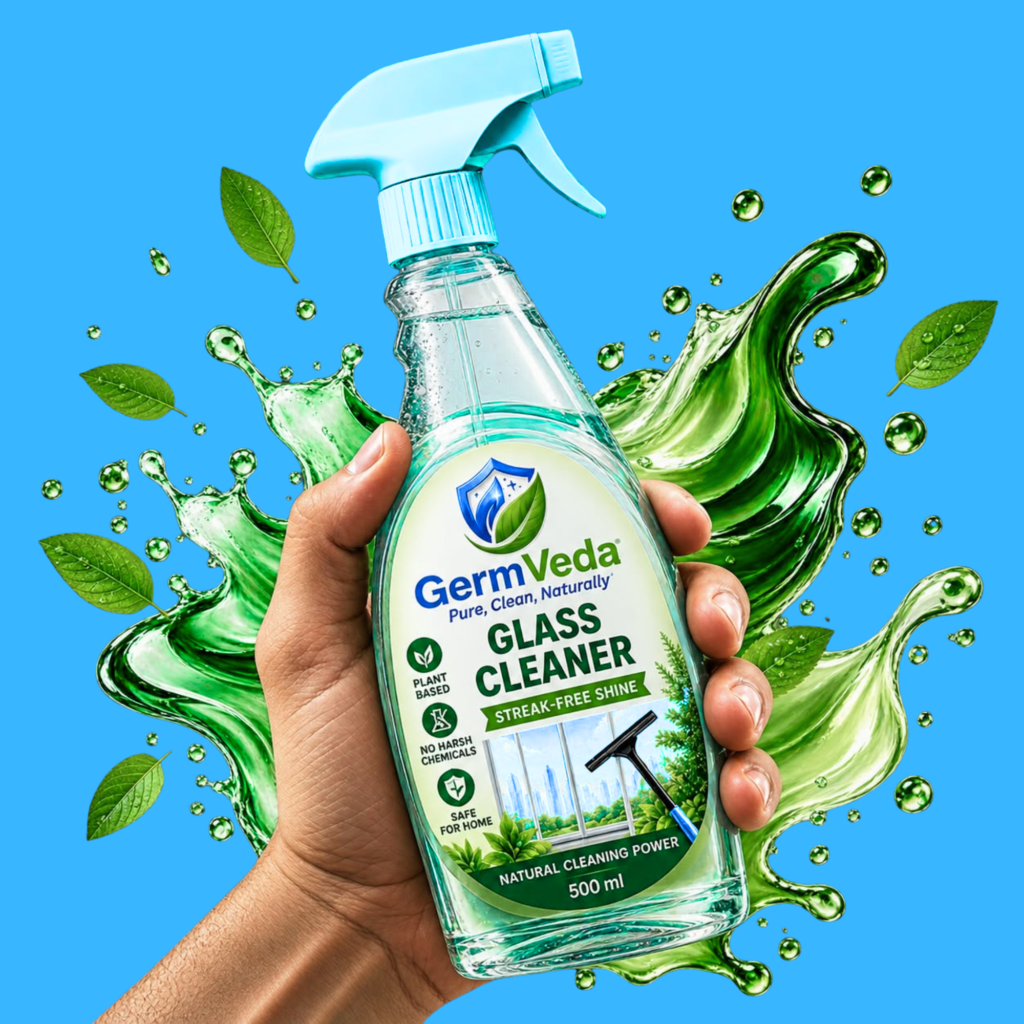
Natural and plant-based glass cleaners are popular among consumers who want alternatives to some conventional formulations. They may use ingredients derived from renewable sources or avoid certain added fragrances and solvents.
However, natural origin alone does not establish safety. Naturally derived ingredients can still irritate skin, trigger sensitivities, or be unsuitable for particular surfaces. Synthetic ingredients can also be appropriate when used in well-formulated products according to their instructions.
When evaluating a natural glass cleaner, consider:
- Whether the ingredients are disclosed clearly.
- Whether the product is suitable for your intended glass surface.
- Whether it has useful safety instructions.
- Whether fragrance or other ingredients may be unsuitable for your household.
- Whether environmental claims are supported by credible information.
- Whether the product cleans effectively without requiring excessive application.
Do not rely only on terms such as “green,” “eco,” “pure,” or “natural.” These descriptions may communicate a marketing position but do not provide a complete assessment of a product’s safety.
A fragrance-free, well-labelled conventional cleaner may be a reasonable option. A carefully formulated plant-based cleaner may also be suitable. The best choice depends on the actual ingredients, the task, and how the product is used.
5. Is Homemade Glass Cleaner a Healthy Option?
Homemade glass-cleaning solutions can be useful for simple household cleaning, provided the ingredients are suitable for the surface and are used carefully.
A basic option is water mixed with a small amount of mild dishwashing liquid. This solution can help remove fingerprints, dust, and light grease from many ordinary glass surfaces.
A simple water-and-soap solution
You will need:
- Clean water.
- A small amount of mild dishwashing liquid.
- A clean spray bottle or bucket.
- A soft microfiber cloth.
Add a small amount of dishwashing liquid to the water and mix gently. Apply the solution to the glass with a cloth, wipe away the dirt, and use a separate cloth dampened with clean water if rinsing is needed. Dry the glass with a clean microfiber cloth to minimise streaks.
Do not add excessive detergent. A highly concentrated mixture may leave residue that makes the glass appear cloudy.
What about vinegar and water?
Diluted white vinegar is sometimes used for cleaning certain glass surfaces because its acidity can help loosen some mineral deposits. However, it is not suitable for every material.
Vinegar can damage natural stone such as marble and may be unsuitable for certain metal finishes, coatings, protective films, or sealants. Check the manufacturer’s instructions and test compatibility before use.
Vinegar also has a noticeable smell that some people may find unpleasant. It should not be considered automatically safer simply because it is a common household ingredient.
Never mix vinegar with bleach or combine bleach with ammonia-containing products. Dangerous gases can be released. Do not mix homemade solutions with commercial cleaners, and always use one product at a time.
For many households, a mild soap-and-water solution is a practical first choice for ordinary glass.
6. What Should You Avoid in a Glass Cleaner?
There is no universal list of ingredients that must be avoided by every person. Instead, focus on ingredients and product characteristics that may be unsuitable for your household, the surface, or the intended cleaning method.
Unnecessary strong fragrance
If you are sensitive to scents, products with heavy fragrances may be uncomfortable. A fragrance-free product may help reduce this particular source of irritation.
Products with unclear directions
Avoid using products that do not provide adequate instructions for the intended task. Clear directions help you understand how much to apply, whether ventilation is needed, and which surfaces should be avoided.
Abrasive ingredients or tools
A product that contains abrasive particles, or a cleaning method that involves rough scrubbing, may scratch glass or damage a protective coating. Use a non-abrasive cleaner and a soft cloth unless the manufacturer specifically approves another method.
Incompatible solvents
Some solvents may damage tinted films, plastics, sealants, or coatings. Confirm that a cleaner is suitable before applying it to these surfaces.
Unverified safety claims
Terms such as “chemical-free” are not scientifically meaningful descriptions of an ordinary liquid cleaner, since water and all cleaning ingredients are chemicals. Claims such as “non-toxic” also need context because safety depends on formulation, exposure, and intended use.
Read the label and use reliable safety information rather than making a decision based on marketing language alone.
7. How to Use Glass Cleaner Safely at Home
Even a suitable glass cleaner should be used according to its directions. Correct application can reduce unnecessary exposure and improve the cleaning result.
Step 1: Read the label
Check the intended uses, warnings, first-aid information, and storage instructions. Confirm that the product is suitable for the glass you plan to clean.
Step 2: Provide ventilation
Open a window or use suitable ventilation when the label recommends it, particularly when cleaning a bathroom or another enclosed space.
Step 3: Remove loose dust
Use a clean, soft cloth or brush to remove dust and grit. This prevents particles from scratching the glass when you wipe it.
Step 4: Apply only the required amount
Use the recommended quantity of cleaner. Excessive spraying does not necessarily improve performance and may create additional exposure or residue.
For mirrors and surfaces with sensitive edges, applying the cleaner to the cloth rather than spraying directly onto the glass can help prevent liquid from seeping into gaps.
Step 5: Wipe with a clean cloth
Use a microfiber cloth and gentle, overlapping strokes. Change or rinse the cloth when it becomes dirty.
Step 6: Dry and inspect
Use a clean, dry cloth to remove remaining moisture. Check the surface for streaks and repeat only where needed.
Step 7: Store the product correctly
Keep cleaning products in their original, labelled containers and away from children, pets, heat, and direct sunlight where the label recommends. Never transfer a cleaner into a beverage bottle.
Following these steps helps make routine glass cleaning safer and more effective.
8. Is Fragrance-Free Glass Cleaner Better?
Fragrance-free glass cleaners can be a useful option for people who prefer to avoid added scents or who find strongly scented products uncomfortable.
Fragrances are not essential to the basic task of removing dirt from glass. A product can clean effectively without having a noticeable perfume.
However, fragrance-free does not mean ingredient-free, chemical-free, or completely non-irritating. A fragrance-free cleaner may still contain surfactants, solvents, preservatives, or other ingredients that require normal precautions.
When selecting one, look for a clear fragrance-free label and read the rest of the ingredient and safety information. If you have experienced irritation from a particular product, avoid reusing it until you have identified a suitable alternative.
Also distinguish between “fragrance-free” and “unscented.” Unscented products may contain masking ingredients to reduce the smell of other components.
For households where scent is a concern, fragrance-free products are worth considering, but the complete formulation remains important.
9. What Is the Healthiest Way to Clean Windows and Mirrors?
The healthiest cleaning method is usually one that removes the dirt effectively without unnecessary product use, excessive exposure, or damage to the surface.
For ordinary windows and mirrors, follow this approach:
- Remove loose dust with a clean, soft cloth.
- Use water with a small amount of mild detergent, or a compatible glass cleaner.
- Apply the solution to a cloth when direct spraying could cause overspray or liquid to enter sensitive edges.
- Wipe the surface gently.
- Remove residue with a clean, damp cloth if necessary.
- Dry the surface with a separate microfiber cloth.
Avoid mixing products or using more cleaner than necessary. If the glass has hard-water deposits, heavy grease, or specialist coatings, choose a treatment designed for that specific problem.
For large exterior windows, use suitable equipment and work from a secure position. Do not lean out of windows or stand on unstable furniture to reach high glass. Hiring a qualified cleaner may be safer for inaccessible windows.
This approach prioritises effective cleaning, appropriate product use, and practical safety.
10. How Does Glass Cleaner Compare With Water Alone?
Water alone can remove loose dust and some water-soluble dirt. It is often enough for a quick wipe of lightly soiled glass.
However, water may struggle with greasy fingerprints, oily films, and some stubborn residues. Depending on its mineral content, water can also leave spots if droplets are allowed to evaporate on the glass.
A suitable glass cleaner or mild detergent solution can help loosen contamination that water alone does not remove effectively.
For light dust, start with a clean microfiber cloth and water if appropriate. For fingerprints and grease, consider a mild detergent solution or a compatible glass cleaner. For mineral deposits, use a product designed for the specific residue and surface.
The objective is to use the simplest method that works, rather than automatically reaching for a stronger cleaner.
11. How to Choose a Glass Cleaner for Homes With Children and Pets
Households with children and pets should pay particular attention to storage, application, and product instructions.
Choose a product with clear labelling and use it only for its intended purpose. A fragrance-free formulation may be preferable if strong scents are a concern, but it should not be assumed to be harmless if swallowed or contacted with the eyes.
Keep cleaning products securely stored and out of reach. Do not leave spray bottles unattended on tables, counters, or windowsills. Allow cleaned surfaces to dry as directed before allowing children or pets to contact them.
Avoid spraying products near pet food, children’s toys, food-preparation areas, or animal habitats. Where overspray could be a concern, apply the cleaner to a cloth instead.
Never leave a homemade cleaning solution in an unlabelled container. Children may mistake clear liquids for drinking water.
If accidental ingestion or significant exposure occurs, follow the product’s first-aid instructions and seek appropriate medical or poison-control advice. Do not assume that a natural or homemade product is safe to swallow.
12. Are Eco-Friendly Glass Cleaners Better for the Environment?
Some glass cleaners are marketed as environmentally preferable because of their ingredients, packaging, manufacturing practices, or other product characteristics. These features may be worth considering, but environmental claims should be assessed carefully.
Look for specific, credible information rather than relying solely on broad terms such as “green” or “earth-friendly.” Independent certification, where relevant and legitimate, can provide additional information about particular environmental criteria.
Packaging also matters. Concentrated products may reduce packaging or transport requirements in some situations, while refillable bottles can help reduce disposable packaging when used appropriately.
However, a product’s environmental impact cannot be determined by a single feature. Ingredients, manufacturing, transport, packaging, and how the product is used all contribute.
Choose a cleaner that suits the surface, performs effectively, and provides trustworthy information about its environmental claims. Avoid using excessive amounts, and follow the label’s disposal instructions.
13. Common Mistakes to Avoid When Choosing a Healthier Glass Cleaner
Several common assumptions can lead to poor product choices or disappointing cleaning results.
Assuming natural means harmless: Naturally derived ingredients can still cause irritation or be unsuitable for particular materials.
Choosing only by fragrance: A pleasant smell does not demonstrate cleaning effectiveness or safety.
Using a strong cleaner for every task: A mild solution may be sufficient for routine dirt, while stronger products may introduce unnecessary exposure.
Ignoring surface compatibility: Some products can damage tinted films, specialist coatings, plastics, or mirror backing.
Mixing products: Combining cleaners can create dangerous reactions. Use one product at a time and follow the label.
Using too much product: Excess cleaner can leave residue and increase unnecessary exposure.
Believing every cleaner disinfects: Ordinary glass cleaner does not automatically kill germs. Use an appropriate disinfectant if that is part of the task.
Avoiding these mistakes makes it easier to choose a cleaner that balances performance, convenience, and sensible precautions.
14. How Often Should You Clean Glass?
Cleaning frequency depends on how quickly a surface becomes dirty.
- Windows: Clean when dust, rain marks, or fingerprints become noticeable.
- Mirrors: Wipe away splashes and smudges as needed.
- Kitchen glass: Clean regularly to prevent grease buildup.
- Shower screens: Remove water after use and perform deeper cleaning when residue appears.
- Glass tables: Wipe up spills and fingerprints promptly.
- Office glass doors: Clean high-touch areas regularly to maintain a neat appearance.
Homes near busy roads, construction sites, or dusty outdoor environments may require more frequent cleaning. Bathrooms with hard water may also develop deposits more quickly.
Regular light cleaning reduces the need for heavy scrubbing and makes it easier to use mild products effectively.
15. What Is the Best Overall Choice?
For many households, the best starting point is a mild dishwashing-liquid solution for ordinary dirt, combined with a clean microfiber cloth. This method is straightforward and may be enough for windows, doors, and glass tables that do not have specialist coatings.
For convenience, a well-labelled, fragrance-free commercial glass cleaner may be a suitable alternative. Choose a product designed for your surface, read the instructions, and use only the amount required.
For hard-water deposits, heavy grease, or delicate glass, select a compatible specialist cleaner rather than assuming that one formula will solve every problem.
There is no universal healthiest glass cleaner for all people and surfaces. The most appropriate option is one that cleans effectively, provides clear safety guidance, suits your household’s needs, and does not create unnecessary exposure.
Conclusion
So, what is the healthiest glass cleaner? In many everyday situations, a mild water-and-detergent solution or a suitable fragrance-free commercial glass cleaner is a sensible choice. The best option depends on the glass surface, the type of dirt, the product’s formulation, and the needs of the people using it.
Look for clear ingredient information, appropriate safety instructions, and compatibility with your windows, mirrors, and other glass surfaces. Remember that natural or plant-based ingredients are not automatically harmless, and fragrance-free products still require normal precautions.
For better results, remove loose dust first, use only the necessary amount of cleaner, wipe with a clean microfiber cloth, and dry the surface carefully. Keep products labelled and securely stored, provide ventilation when needed, and never mix cleaning chemicals.
Choosing a suitable cleaner and using it correctly can help you maintain clear, attractive glass while making household cleaning more practical. A simple, informed approach is often more useful than searching for a product that promises to be completely risk-free.
What Is the Healthiest Glass Cleaner?/What Is the Healthiest Glass Cleaner?/What Is the Healthiest Glass Cleaner?/What Is the Healthiest Glass Cleaner?
What Is the Healthiest Glass Cleaner?/What Is the Healthiest Glass Cleaner?/What Is the Healthiest Glass Cleaner?/What Is the Healthiest Glass Cleaner?
What Is the Healthiest Glass Cleaner?/What Is the Healthiest Glass Cleaner?/What Is the Healthiest Glass Cleaner?/What Is the Healthiest Glass Cleaner?
What Is the Healthiest Glass Cleaner?/What Is the Healthiest Glass Cleaner?/What Is the Healthiest Glass Cleaner?/What Is the Healthiest Glass Cleaner?
What Is the Healthiest Glass Cleaner?/What Is the Healthiest Glass Cleaner?/What Is the Healthiest Glass Cleaner?/What Is the Healthiest Glass Cleaner?
What Is the Healthiest Glass Cleaner?/What Is the Healthiest Glass Cleaner?/What Is the Healthiest Glass Cleaner?/What Is the Healthiest Glass Cleaner?
What Is the Healthiest Glass Cleaner?/What Is the Healthiest Glass Cleaner?/What Is the Healthiest Glass Cleaner?/What Is the Healthiest Glass Cleaner?
What Is the Healthiest Glass Cleaner?/What Is the Healthiest Glass Cleaner?/What Is the Healthiest Glass Cleaner?/What Is the Healthiest Glass Cleaner?
What Is the Healthiest Glass Cleaner?/What Is the Healthiest Glass Cleaner?/What Is the Healthiest Glass Cleaner?/What Is the Healthiest Glass Cleaner?
What Is the Healthiest Glass Cleaner?/What Is the Healthiest Glass Cleaner?/What Is the Healthiest Glass Cleaner?